
Understanding door locks diagram basics
Definition and purpose of a door locks diagram
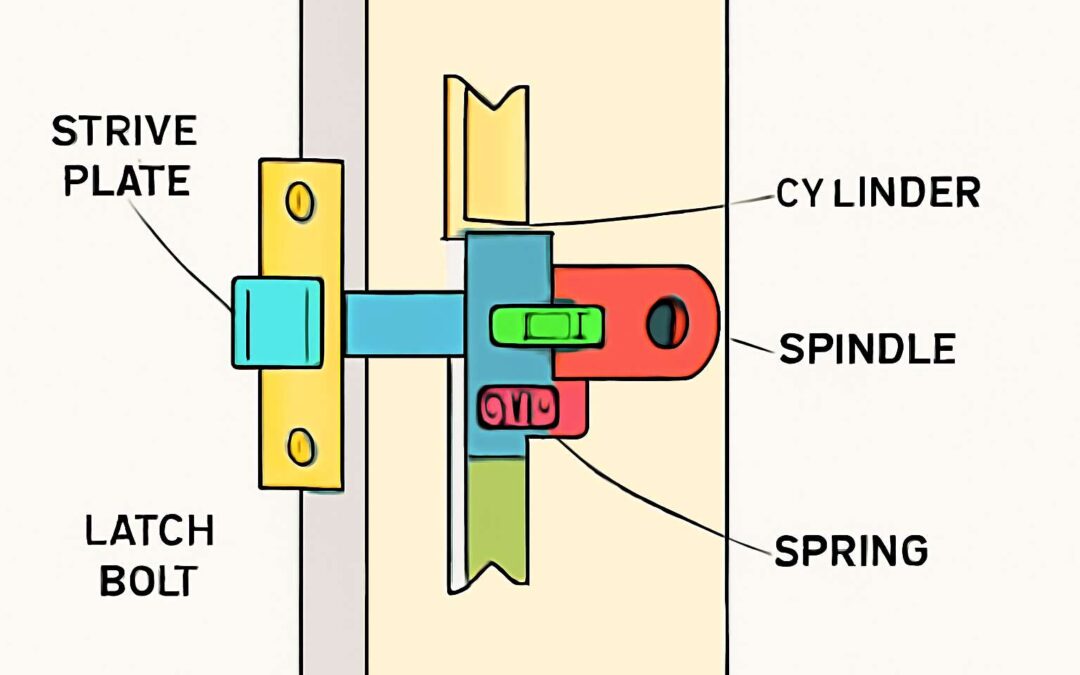
Security begins with a map. A door locks diagram helps teams avoid miscommunication about entry points, revealing where a vulnerability hides in plain sight. It clarifies how components like the cylinder, latch, and strike plate interact, turning hardware into a readable framework.
Definition and purpose: A door locks diagram is a schematic that identifies each element of a locking system and shows their relationships. It provides practical clarity for designers, installers, facilities managers, and security officers, ensuring a shared language when describing access, maintenance, or compliance.
- Lock body and housing
- Cylinder and keyway
- Latch, bolt, and actuator
- Strike plate and backset
In South Africa, this diagram serves construction, property management, and security audits, enabling clear specifications and training. That language travels from blueprints to maintenance logs, bridging design intent and real-world performance.
Common symbols and notation used in diagrams
Security begins with a map. In South Africa’s varied buildings, a door locks diagram offers clear navigation, turning complex hardware into a readable map of relationships among the cylinder, latch, and strike plate.
Understanding basics means decoding common symbols and notation. A circle marks the cylinder and keyway; a rectangle denotes the lock body; arrows show bolt motion, while dashed lines hint at concealed components.
- Circle or ellipse for cylinder and keyway
- Rectangle blocks for lock body and strike plate
- Arrows for actuator movement and bolt travel
These conventions bridge blueprints to maintenance logs, enabling security officers and facilities managers to share a single vision. Clarity travels from planning rooms to on-site service, a fluent grammar of access that resists misinterpretation.
Viewed through this lens, the door locks diagram is a guardian of consistency, a narrative of entry-point performance, and resilience within South Africa’s built environment.
How to read a door locks diagram step by step
A clean door locks diagram does more than decorate the wall; it trims chaos from maintenance calls and makes on-site chatter feel like a well-rehearsed performance. A veteran facilities manager once quipped, “A map is trust—no one misreads the lines when they’re legible.”
When you read the diagram, the flow becomes clear. Follow the choreography from the cylinder to the latch and strike, notice where arrows indicate bolt travel, and watch for dashed lines that reveal concealed hardware. The goal is to translate hardware into a readable narrative, not to dazzle with acronyms.
In practice, a few quick cues keep interpretation precise:
- Location cues: where parts sit on the door and jamb
- Movement indicators: arrows for bolt motion and handle action
- Cross-references: notes linking to hardware specs and installation guides
This is how diagrams become practical maps for planning and maintenance.
Benefits of diagrams in installation and maintenance
A surprising 87% of maintenance missteps trace back to an unclear door locks diagram. That’s not fiction—it’s a quiet truth that keeps technicians awake at night. When I read a door locks diagram, the path from the cylinder to the strike suddenly feels inevitable, a cinematic map rather than a tangle of hardware.
Understanding the basics unlocks practical advantages during installation and ongoing care.
- Clear location and movement cues that dodge misalignment
- Faster fault isolation and smoother handovers between teams
- Better compliance with specs and safety standards
- Less downtime during maintenance windows!
Across South Africa’s facilities, these diagrams translate hardware into a readable story, guiding planning, procurement, and routine checks with a steady, almost supernatural clarity. A well-made diagram becomes a shared language that steadies the workflow and silences the chaos.
Lock types and diagram representations
Deadbolt lock diagrams and components
Lock types sit like sentinels at the threshold, and the deadbolt is the quiet heavyweight of security. In a door locks diagram, its silhouette tells a practical story: how the bolt slides into the strike, how the cylinder aligns with the spindle, and how backset distances shape fit and function. Reading these diagrams feels almost tactile; you can hear the metal whisper when the handle turns and the latch retracts, a small drama played out in metal and space.
- Bolt throw length and deadbolt type
- Strike plate and jamb alignment
- Backset, faceplate, and mounting screws
- Cylinder, plug, and spindle
- Door edge prep and alignment tolerances
Thus, deadbolt diagrams translate theory into installation realities, guiding technicians and fitters across South Africa to anticipate misalignment, wear, and maintenance cycles. The diagrammatic language is precise yet human, revealing a system’s temperament at a glance.
Knob and lever lock diagrams
In every door locks diagram, there’s a story of fit and fault tolerance. “Lock diagrams speak a practical language of hardware,” notes a seasoned technician. Knob and lever configurations may look simple, but the diagram reveals how the handle, spindle, and latch align with the strike.
To read the flow, it helps to map the common lock types onto their diagrams. The silhouette shows where the cylinder sits, how the bolt retracts, and where backset and mounting screws anchor the assembly.
Typical categories include:
- Knob lock diagrams
- Lever lock diagrams
- Mortise lock diagrams
- Euro cylinder diagrams
In practice, these diagrams forecast how the mechanism behaves under wear and how maintenance conversations are framed across South Africa.
Electronic and smart lock diagrams
Within every lock’s silhouette lies a tale of fit and fault tolerance, a quiet ledger of wear. Across South Africa, a well-drawn door locks diagram becomes more than ink—it is a safeguard, a map of how the cylinder sits, how the bolt retracts, and how the backset anchors the jamb. “Lock diagrams speak a practical language of hardware,” notes a seasoned technician.
Electronic and smart lock diagrams expand the lexicon, tracing battery packs, wireless modules, and motorized latches.
- Electronic lock diagrams
- Smart lock diagrams
In South Africa, these diagrams frame maintenance conversations, guiding safety checks and future-proofing through quiet, confident precision.
Mortise and cylinder lock diagrams
In South Africa, a door locks diagram works like a compass for craftsmen and homeowners alike. Mortise lock diagrams reveal the sturdy case, bolt retract mechanism, and backset relationship, while cylinder lock diagrams trace the heart of the mechanism—the cam, spinning core, and tailpiece—along the axis of motion. As a seasoned technician reminds us, “A diagram is the eye that sees fit and failure before the first screw is turned.”
These representations, rendered in careful scale and notes, keep maintenance conversations grounded and precise. The following elements often appear together in expert diagrams:
- Mortise diagram: case size, strike plate, backset, screws
- Cylinder diagram: cylinder length, cam alignment, escutcheon orientation
- Clearances and tolerances for smooth operation
In the SA context, such door locks diagram representations become part of the house’s security tapestry, linking fit, function, and future-proofing in a single, readable sketch of truth.
Door hardware components shown in diagrams
Strike plates, frames, and alignment
Framings and hardware make or break door security. In South Africa, one in three door incidents involve misalignment or a weak strike plate, underscoring the need for careful reading of a door locks diagram.
Door hardware components shown in diagrams—strike plates, frames, and alignment—form the backbone of a secure, reliable opening. The strike plate anchors the latch to the frame; the frame provides the skeleton that keeps the door square; alignment ensures the latch and strike meet cleanly every time. The door locks diagram uses precise symbols to map these relationships, clarifying how components interact during operation.
- Strike plate: the metal receptor that receives the latch
- Frame: the door’s structural boundary that stays square and true
- Alignment: correct gaps, beveling, and strike positioning for smooth engagement
Used in installation and design reviews, this approach of illustrating hardware in context helps avoid misfit and binding, keeping doors performing as intended.
Backset, latch bolt, and bolt geometry
Every door tells a story, and the door locks diagram is its map. In South Africa’s varied homes, a clear diagram translates cold metal into confident security, guiding technicians through the choreography of hardware. It highlights how backset, latch bolt, and bolt geometry work in concert to create openings that feel effortless and stay secure.
Backset governs the door’s fit, shown as the distance from the door edge to the latch center. The diagram uses this measure to reveal how the latch will meet the strike and how the door will swing.
Latch bolt is the spring-loaded tongue that protrudes and retracts as you operate the handle. The door locks diagram traces its movement, clarifying how timing and housing ensure a clean engagement.
- Backset: distance from door edge to latch center
- Latch bolt: the spring-loaded tongue that retracts and springs into the strike
- Bolt geometry: the shape, length, and beveling that govern engagement
Bolt geometry finishes the ensemble, with bevels, throw length, and strike alignment ensuring smooth, durable operation.
Cylinder and cam representations
Doorways in South Africa carry more than entry points; they carry a language. In the door locks diagram, the cylinder and cam representations reveal how a simple twist becomes a measured act of security. The cylinder houses pins and a shear line that align with a key cut, while the cam translates rotation into the exact retraction or engagement of the bolt. The diagram uses clean lines to turn mechanical chatter into readable action, almost whispering the physics of a secure door.
- Cylinder: the rotating core that houses pins and shear line; accepts the key cut.
- Cam: the lever or wheel that translates rotation into latch movement.
Seen together, these elements demonstrate why precision matters and why a door locks diagram becomes a map technicians rely on to anticipate movement and timing across South African homes and offices.
Faceplates, trim, and mounting screws
South African doorways guard more than space; they safeguard stories etched in hardware. The door locks diagram turns those stories into a visual map, revealing three quiet actors—faceplates, trim, and mounting screws—that decide how a doorway breathes security. The diagram’s clean lines render mechanical chatter into a readable, almost spectral, choreography.
Faceplates provide a slim shield around the latch, guiding the bolt and masking gaps where weather and wear would creep in. Their shape—wrap-around or standard—affects alignment and the door’s overall temperament, a subtle but crucial detail you only notice when the diagram breathes life.
Trim and mounting screws finish the silhouette and anchor the hardware to door and frame. Stainless steel or brass resist rust in humid coastal pockets, while correct screw length and thread pitch keep the mechanism precisely positioned after years of use.
- Faceplates
- Trim
- Mounting screws
In the door locks diagram, these components whisper how alignment, finish, and fastenings converge to shape a door’s final stand.
Applications and optimization for SEO with diagrams
Optimizing content for the keyword door locks diagram
In South Africa, homeowners and installers are waking to a quiet truth: a door locks diagram can turn shadowed decisions into clear, confident choices! Nearly 70% say it clarifies what to buy and how to install.
Applications of such diagrams span planning retrofit projects, site surveys, and ongoing maintenance checks. They help engineers map compatibility between lock types and frames, while installers communicate steps with precision—reducing misfits and downtime. I have seen the clarity save time and trouble.
Optimization for SEO with diagrams begins with faithful usage in headings and image alt text, plus descriptive captions and structured data. Align related terms, craft a readable flow, and ensure the diagram loads quickly for mobile readers.
- Residential security upgrades
- Commercial access control projects
- Educational facilities and housing estates
Using diagrams for DIY installation guides
In South Africa, nearly 70% of homeowners say a door locks diagram clarifies what to buy and how to install. A well-crafted diagram does more than show parts—it reframes complexity into elegant choices, guiding hands from planning to fitment in one breath.
Optimization for SEO with diagrams starts at the craft: faithful usage in headings and image alt text, evocative captions, and structured data that search engines respect. Align related terms, maintain a readable flow, and ensure the diagram loads quickly on mobile.
- Part positioning and compatibility
- Step-by-step installation sequence
- Clear callouts for frames and backset
Used as a DIY installation guide, this diagram becomes a quiet tutor—steady, precise, and endlessly adaptable to homes, campuses, and workplaces across the country.
Creating comparison diagrams and feature callouts
Across South Africa, roughly 70% of homeowners report that a door locks diagram clarifies what to buy and how to install. When deployed as an applications diagram, it helps teams weigh options, compare backsets and frame fit, and steer conversations from planning to fitment with calm clarity. It reframes complexity into confident design choices.
Optimization for SEO with diagrams starts at the craft: faithful headings, image alt text, evocative captions, and structured data that search engines respect. A door locks diagram serves as a quiet tutor for readers and search engines alike, guiding you through options without drowning you in jargon.
- Clear comparison diagrams
- Feature callouts for compatibility
- Mobile-friendly rendering and fast load times
The result is a well-structured page that preserves readability, aligns with related terms, and lands in the right hands on mobile and desktop alike.
Accessibility considerations and alt text for diagrams
Across South Africa, a compelling cue for buyers is the door locks diagram: a surprisingly clear map of options and fitment. When used as an applications diagram, it helps teams compare backsets, frame fit, and installation sequences, turning complexity into calm, confident design choices.
Accessibility should thread through every diagram. Descriptive alt text invites readers using screen readers to grasp function and placement without guessing, while avoiding jargon. Thoughtful captions and semantics lift understanding for all readers.
- Descriptive alt text that conveys purpose and position
- Keep the description concise and independent of decorative details
- Include key dimensions and components where relevant
From an SEO standpoint, diagrams deserve a share of the spotlight: faithful file names, alt text, evocative captions, and structured data help search engines index the content and surface the door locks diagram in relevant queries. Mobile rendering and fast load times further amplify visibility.