
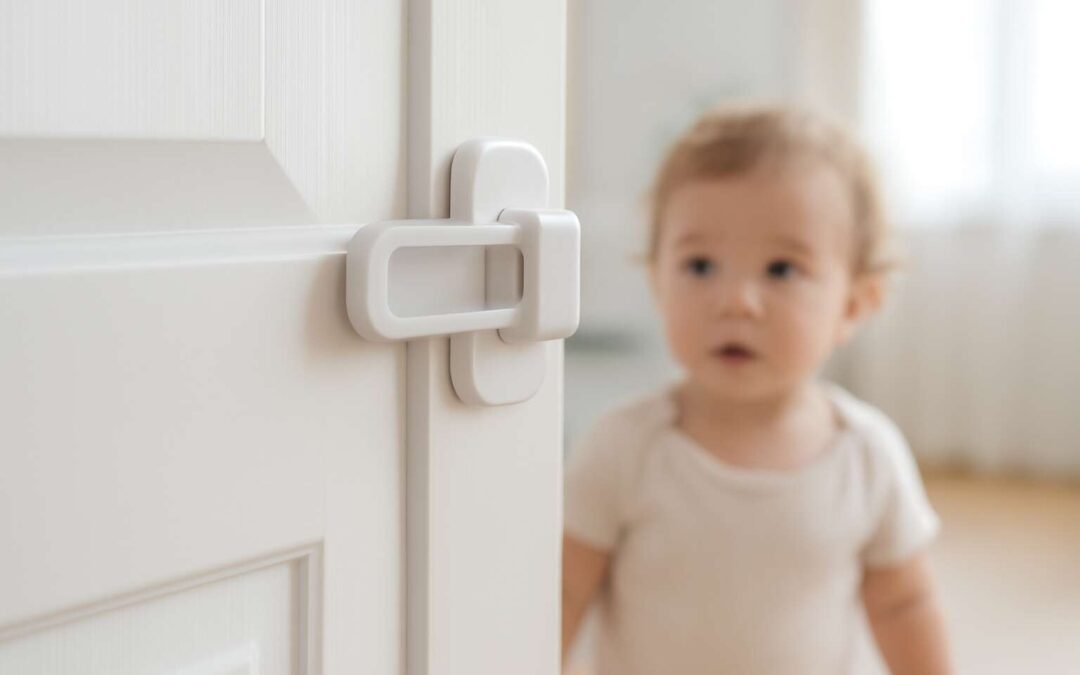
Choosing the Right Locks for Toddlers
Top lock types for toddlers
With curious toddlers, one quick explore can turn into a doorway dilemma. A recent South African household safety survey shows that door safety ranks among top concerns for parents, making the choice of locks a crucial decision.
Here are the top lock types for toddlers to consider:
- Magnetic door locks: Hidden and tamper-resistant; release with a magnet.
- Door knob covers: Simple, quick to install; block turning.
- Sliding bolt locks: Durable for interior doors; mount higher to stay out of reach.
When selecting among options, seek durability, ease of use for adults, and minimal maintenance. Wipe-clean finishes and corrosion resistance suit South African climates, and compatibility with common door frames matters more than flash.
Ultimately, the right safety door locks for toddlers create a calm, confident home where curiosity can flourish without unnecessary risk.
Factors to consider when selecting door locks
One in five parents in a South African safety survey report near-misses when curious toddlers meet a door halfway. For safety door locks for toddlers, the art lies in durable, user-friendly design that survives busy hands and hurried mornings. I’ve seen households where a lock’s quiet reliability becomes the hinge on daily life, allowing exploration without frantic rescues!
Consider the environment and daily rhythm. Key factors include durability, ease of adult operation, and minimal maintenance.
- Durability under frequent use
- One-handed operation for adults
- Maintenance simplicity and wipe-clean surfaces
Choose options with wipe-clean finishes and corrosion resistance suited to SA climates, and ensure compatibility with your door frames. The right choice yields a calmer, more confident home where curiosity can thrive.
Safety features to look for for toddler-proofing
Curiosity moves at a toddler’s pace, yet the house keeps up. In South Africa, a calm morning often rides on a lock that stays reliable through hugs, mischief, and a flurry of doors. “Safety isn’t about restraint; it’s about guiding curiosity,” a mentor once reminded me, and that line shapes every choice we make for toddler-proofing.
- Durable, corrosion-resistant materials suited to SA climates
- One-handed operation for adults
- Wipe-clean surfaces with straightforward maintenance
Also consider compatibility with your door frames and a finish that wipes clean after the inevitable fingerprints. When you choose safety door locks for toddlers, you invest in a home where curiosity can grow safely.
Sizing and door compatibility and fit
In a house where sunlight pools like spilled mercury and a toddler’s quiet coos threaten mischief, the right lock becomes more than metal. Safety door locks for toddlers must pass this quiet test.
I listen to the door as if it breathes, for doors vary in thickness and geometry; a lock that shares space with hinges and jambs respects the craft of your home.
Compatibility wears many faces: mortise, surface-mounted, or hybrid designs—each with a homeward pull toward the hinges and handle. Choose a finish that wipes clean after fingerprints and a design that tolerates South African humidity without rust.
In the end, the lock should be a quiet guardian—present, reassuring, and never breaking the spell of a curious home.
Pros and cons by room and door type
The quiet click of a door can save a childhood. Choosing safety door locks for toddlers requires listening to the home, noting rooms where curiosity blooms—nursery corners, kitchens, and living spaces—and door types that come in many shapes. A lock should honor thickness, alignment, and humidity, staying a calm guardian rather than a prompt for drama. In South Africa’s sunlit homes, the right mechanism breathes with the family and the child.
- Bedrooms and nursery doors: Pros – gentle tamper-resistance and quiet operation; Cons – can slow late-night checks if the latch is stubborn.
- Kitchen and pantry doors: Pros – strong containment for spills and mess; Cons – frequent daily use may wear mechanisms sooner.
- Living areas and hallways (including sliding doors): Pros – smooth, simple geometry; Cons – some designs leave gaps little fingers can explore.
- Exterior stairs or courtyard doors: Pros – robust hardware and added security; Cons – heavier installation and weather wear.
Ultimately, the lock becomes a patient gatekeeper, a whisper of order that lets everyday life unfold with dignity and wonder.
Types of Door Locks for Childproofing
Slide bolts vs ball-tip latches
A curious toddler can turn the ordinary act of closing a door into a tense moment. “Curiosity is a doorway—lock it, and the hallway stays safe,” says a South African child-safety expert. In childproofing door hardware for young explorers, two contenders rise to the challenge: slide bolts and ball-tip latches.
Slide bolts offer straightforward operation and broad compatibility, a familiar staple in many SA homes. Ball-tip latches glide quietly and resist persistent attempts by small hands. See these distinctions:
- Slide bolts: simple install, easy alignment, quick access for adults
- Ball-tip latches: enhanced security, smoother closing, reduced pinch points
Each option carries caveats: slide bolts can be easy for capable toddlers to manipulate, while ball-tip latches may demand precise alignment and placement.
In South Africa, choosing the right option among safety door locks for toddlers means balancing practicality and safety, with vigilant care that keeps homes calm.
Door knob covers and safety levers
When tiny explorers stage a door-scouting mission, a well-chosen lock can turn chaos into quiet. In South Africa, where curiosity runs wild and collision with doorframes is a daily ritual, households estimate toddlers check doors up to 40 times a day—making safety door locks for toddlers essential, not optional.
Door knob covers slip over standard knobs, turning a simple twist into a small, solvable puzzle. They’re affordable and quick to fit in many SA homes, yet a determined toddler may outsmart them or drop the cover into a new plaything.
Safety lever locks dress lever handles in a snug sheath, preventing sneaky exits. They can be a touch fussy to fit on some doors and may require a precise alignment, but they dramatically cut the chance of unplanned sprints to the other room—precisely the goal of safety door locks for toddlers.
Magnetic locks and proximity sensors
Across SA households, toddlers are at doors dozens of times a day, testing handles and peering into the next room. This is where safety door locks for toddlers become more than a choice—they are a quiet, stubborn shield that lets families breathe a little easier.
Magnetic locks offer a clean, unobtrusive profile; an electromagnet on the frame holds a metal plate on the door, so a simple tug won’t release – perfect for lever handles and standard doors alike. Proximity sensors add a smart layer, triggering alerts or auto-locking when a child approaches. In the field, I’ve seen families breathe easier when these locks click into place.
- Silent operation keeps rooms calm and uninterrupted.
- Minimal hardware preserves aesthetics while staying secure.
- Power dependence calls for reliable backup options in load-shedding-prone areas.
In SA homes facing load-shedding and power fluctuations, these systems shine when paired with a reliable backup and straightforward emergency releases—ensuring safety without compromising access for adults in an urgent moment.
Interior door latches for nursery and bedroom doors
<pAcross South Africa, a toddler’s daily door ballet—peering into the next room—casts a stubborn rhythm across a home! In many households, these probes number around 50 a day, reframing safety as a design imperative rather than a cautious gesture.
- Privacy locks that work with lever handles and standard doors
- Door knob covers for quick, reversible deterrence
- Hinge-side latching options that stay low-profile
Choosing interior options is about balance—security without surrendering accessibility for adults. I’ve seen how the right safety door locks for toddlers offer assured calm, letting families move through their homes with confidence.
Temporary vs long-term locking solutions
Lock hunting is half the toddler’s morning routine, apparently—more than half of parents report their little explorers test every door within the first hour of waking. Curiosity doesn’t clock out at 5 pm, and that’s where a good lock strategy earns its keep.
When it comes to types of door locks for childproofing, you balance ease of use with exit safety. Temporary vs long-term locking solutions each have a place in a thoughtful setup. In South African homes, this often means pairing quick-access protections for adults with sturdy, non-permanent installs that can survive the chaos of a busy household. This is where safety door locks for toddlers come into play.
Consider these criteria:
- Non-permanent mounting that won’t mar doors or walls
- Standardized performance and easy reconfiguration for growing kids
- Clear labeling and simple removal by caregivers when needed
Smart locks and app-controlled options
More than half of parents report their little explorers test every door within the first hour of waking. Smart locks and app-controlled options respond to that reality with clarity, especially in busy South African homes. These systems offer remote locking, access logs, and real-time alerts—perfect companions to safety door locks for toddlers. They fit seamlessly into daily routines, letting caregivers grant door access without scrambling for keys or wrestling with squeaky levers.
- Real-time app alerts when a door is opened
- Temporary access codes for babysitters or visiting family
- Battery backup and offline mode to prevent lockouts
Smart options invite a balance between growing needs and reliability; as children grow, reconfiguration should feel simple rather than a puzzle. In South Africa, brands with clear labeling and dependable local support are valued by households.
Installation and Safety Best Practices
Step-by-step installation tips
In South Africa, a single moment can rewrite a day. A recent survey shows that nearly 1 in 3 toddler-related door incidents happen when locks fail to keep curious hands out—this is why safety door locks for toddlers matter more than ever on windy farmsteads and busy townhouses alike.
Installation and safety best practices center on a proper fit, secure mounting, and a design that survives busy households. Our guidance emphasises selecting hardware compatible with door type and frame, then following manufacturer instructions to maintain function for adults while keeping little ones safe. On rural afternoons or in city backyards, these considerations help create calm, knowing that a latch is doing its quiet, invisible work.
Tools you’ll need for installation
Across South Africa, a single moment can rewrite a day. In a recent survey, nearly 1 in 3 toddler door incidents happen when locks fail to keep curious hands out—precisely why safety door locks for toddlers deserve our attention.
Fit and finish hinge on the right toolbox. It’s the difference between a drama-free latch and a door that sighs with relief. Here’s a concise kit to support installation, keeping risk low and results high:
- Measuring tape
- Flat-head and Phillips screwdrivers
- Drill with appropriate bits
- Level for true alignment
- Stud finder and pencil
With these tools in hand, you secure a balance between form and function, ensuring safety door locks for toddlers work as a quiet guardian from wind-blasted farmsteads to sunlit city flats. Always follow the manufacturer’s guidance to protect little hands while preserving effortless access for adults.
Common installation mistakes to avoid
Nearly 1 in 3 toddler door incidents happen when locks fail to keep curious hands out—proof that safety door locks for toddlers deserve premium attention. In South African homes, a rushed installation can turn a calm afternoon into a chorus of chaos; a careful approach blends fit, finish, and forethought.
Common installation mistakes to avoid:
- Misalignment with the strike plate, inviting gaps and finger traps.
- Using the wrong lock type for the door’s thickness or material.
- Over-tightening screws, which can strip holes or warp the face.
- Skipping the manufacturer’s guidance or not testing after fit.
When in doubt, rely on the product specifications and ensure the system protects little hands while still allowing adults to pass with ease—the essence of safety door locks for toddlers in busy homes.
Testing safety after installation and child access testing
Post-installation, the lock is more than metal and screws; it becomes a quiet guardian in a home that never stops. In SA, a rushed fit can turn a calm afternoon into concern, so the moment the latch sits in its cradle, the real test begins.
Testing safety after installation and child access testing should look at how the system behaves under ordinary use: flush alignment, consistent engagement, and free passage for adults without snagging. This is where safety door locks for toddlers reveal their true worth in busy households.
Observe daylight wear, humidity, and door travel over time to ensure the finish remains flawless and the mechanism resilient to little fingers. When the system passes these subtle, ongoing checks, it quietly earns its keep.
Professional installation vs DIY pros and cons
In South Africa, a rushed fit can turn a calm afternoon into concern—something I’ve seen far too often. “Safety isn’t a gadget—it’s a discipline,” a child-safety advocate reminds us. When installing child safety hardware, the choice between professional installation and DIY carries real consequences for reliability and peace of mind.
- Professional installation aligns hardware perfectly, preserves warranties, and reduces misfits in locks designed to safeguard little visitors.
- DIY can save upfront costs and speed, but increases the risk of misalignment and gaps that undermine safety.
- Hybrid approaches let you secure critical steps with a pro while handling finishing touches in-house.
In the end, consider home layout, access needs, and maintenance expectations; these shape the decision for safety door locks for toddlers.
Maintenance, Troubleshooting, and Longevity
Regular inspection checklist
Maintenance is the quiet guardian of safety door locks for toddlers. In SA homes, routine care—gentle cleaning, a dab of silicone lubricant on moving parts, and checking screws—keeps doors behaving predictably. I’ve seen doors sing when maintenance is neglected, and I’ve seen the consequences of snap decisions.
When performance falters, inspect alignment, verify there’s no debris in tracks, and test the lock’s release mechanism. If the latch sticks or the door feels loose, tighten fittings or replace worn components rather than forcing a stubborn action.
Longevity hinges on a regular inspection checklist you can perform with minimal tools. Consider this quick audit:
- Tighten mounting screws; ensure the lock sits flush.
- Check latch alignment with the door edge and frame.
- Inspect for rust, corrosion, or worn finishes.
- Test operation and release to confirm smooth function.
Battery replacement and power options
Maintenance acts as a quiet guardian for safety door locks for toddlers across SA homes. Gentle cleaning, a dab of silicone on moving parts, and periodic screw checks keep doors behaving predictably in a bustling house where curious little hands explore every corner.
When performance falters, observe alignment, check for debris in tracks, and watch the release mechanism in action. If the latch sticks or the door feels loose, pause and reassess instead of forcing movement, preserving safety and long-term reliability.
- Replaceable batteries (alkaline or lithium) with safe handling
- Rechargeable packs with built-in safeguards
- Mechanical or manual override for outages
Longevity hinges on a thoughtful power approach. Battery replacement timing and diverse power options help maintain smooth operation without interruptions.
Cleaning and wear prevention
In SA homes where tiny hands test every corner, a calm sentinel watches the doors—the safety door locks for toddlers. They endure the bustle of play and sleep with quiet, mythic resolve.
Maintenance keeps that guardian shining.
- Surface cleanliness and smooth motion
- Secure mounting and screws intact
When something feels off, resist forcing movement. Observe alignment and motion, and note any creaks. If issues persist, pause and consult a professional to safeguard little ones.
Longevity rests on thoughtful power choices and durable design. Cleaning and wear prevention extend life, keeping homes safe as years pass and curious children roam.
Troubleshooting common issues
In homes where toddlers test every corner, a well-maintained lock is the quiet sentry. Regular upkeep—surface cleanliness and smooth motion—speaks to durable hardware. A loose mounting invites mischief, and a well-kept mechanism has weathered many a restless night in South African households.
Troubleshooting common issues starts with calm observation. Misalignment, creaks, or a latch that resists action are signals that something is off. If troubles persist, pausing and consulting a professional is prudent; these safety door locks for toddlers deserve careful attention.
- Evidence of misalignment with the door frame
- Stiff motion or recurring creaks indicating wear
- Loose screws or signs of corrosion on mounting hardware
Longevity hinges on durable design and thoughtful power choices. Investments in locks with metal cores and non-corrosive finishes withstand humidity and sun, keeping the nursery safe for years.
When to replace vs repair and upgrade considerations
Maintenance of safety door locks for toddlers in South African homes means routine cleaning, lubrication, and inspecting mounting screws—especially in areas with high humidity or strong sun. Wipe away dust, lube moving parts, and test smooth operation monthly to catch wear before it becomes a fault.
Troubleshooting should stay calm and practical. Check alignment, latch action, and mounting stability; many issues vanish with a quick tighten or realignment. If concerns persist, note symptoms and consult the manufacturer’s guide before calling a professional.
- Misalignment with the door frame
- Stiff motion or creaks indicating wear
- Loose screws or signs of corrosion on mounting hardware
Longevity rests on durable design and wise upgrades. If the finish is peeling, the core loosens, or replacement parts aren’t available, replacement is wiser than repair. When upgrading, choose models with reinforced cores and corrosion‑resistant coatings to keep safety door locks for toddlers reliable for years.