
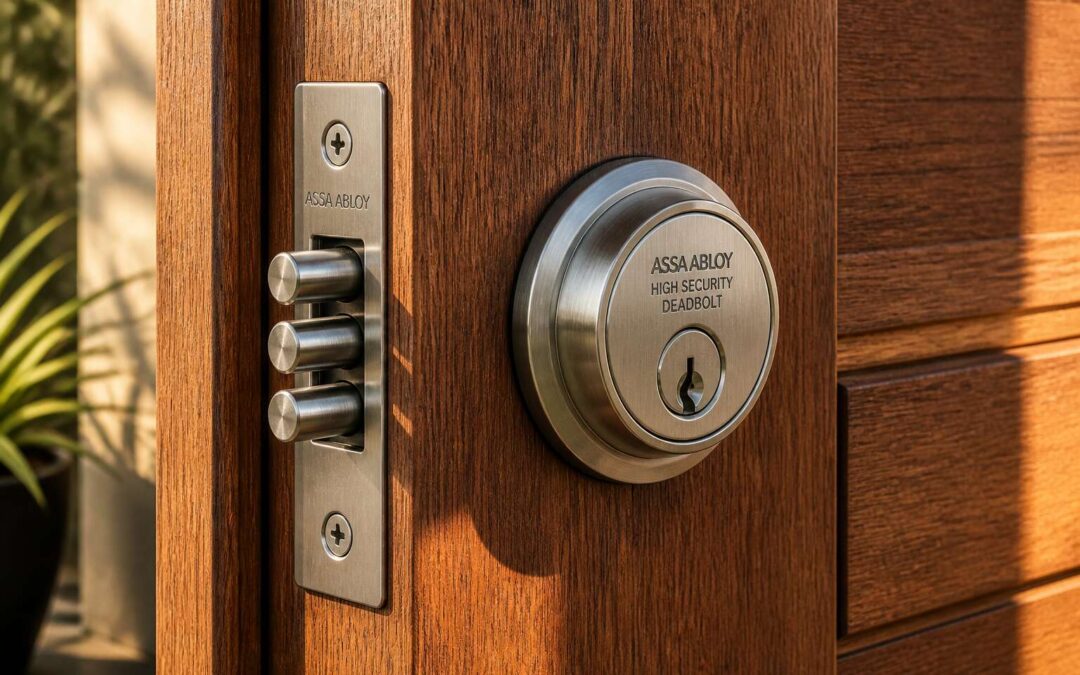
Understanding Australian Security Lock Standards
The Role of AS/NZS 4146 in Lock Certification
A lock’s security rating in Australia is not a marketing claim. It is a measured result. AS/NZS 4146 sets the baseline for deadbolts and deadlatches, grading them on resistance to forced entry, picking, and drilling. A lock without this certification offers no verified protection.
The standard assigns performance levels based on how long a lock withstands attack. Higher grades mean longer resistance. For anyone hunting for the most secure door locks australia, this rating is the first thing to check.
Tests include:
– Physical attack with tools
– Bypass attempts with lock picks
– Drilling and sawing resistance
When a lock carries the AS/NZS 4146 mark, it has survived deliberate abuse. That certification separates real security from decorative hardware.
Deadlock vs Deadbolt: What’s the Difference?
Many people assume deadlock and deadbolt are interchangeable terms. They are not. A deadlock uses a key cylinder on one side and a thumb turn on the other, allowing quick manual locking from inside. A deadbolt requires a key on both sides. That difference matters when you consider forced entry through a window. With a deadbolt, a burglar cannot simply reach in and twist a thumb turn. For the most secure door locks australia, the deadbolt offers a clear advantage because it slows down any attempt to unlock from the inside.
Consider your own door setup.
- Deadlock: key outside, thumb turn inside
- Deadbolt: key on both sides
The choice also affects emergency escape. A deadlock lets you exit fast without hunting for a key. A deadbolt demands a key even from the inside, which could delay a fire exit. So the right pick depends on your priorities. Security professionals often recommend deadbolts for exterior doors where break-ins are the main worry. Deadlocks work better for rooms where quick exit matters more than absolute theft resistance. Understand the mechanism, and you stop guessing.
Lock Grades Explained for Australian Homes
I often find Australian homeowners overlook the lock grade, yet it shapes protection more than brand name. The grade, assigned under the domestic security standard, measures a lock’s resistance to drilling, picking, and levering. A grade 3 lock offers minimal security; grade 1 provides the highest security for exterior doors.
To simplify your selection, remember the breakdown:
- Grade 3: Basic privacy protection, suitable for internal doors.
- Grade 2: Moderate resistance, acceptable for affordable residential entry points.
- Grade 1: Maximum strength, essential for high risk zones or valuable possessions.
However, a higher grade lock alone does not guarantee safety. The door frame, hinges, and installation quality determine the overall performance. For those exploring most secure door locks australia, grade 1 hardware from certified suppliers typically receives the most attention, though it must match your door’s construction.
Key Factors That Determine a Door Lock’s Security Rating
Material Quality and Drill Resistance
Burglars rarely bother picking locks. They drill them. That is why material quality and drill resistance determine a lock’s security rating.
The most secure door locks australia use hardened steel cores. Brass looks nice, but it offers little resistance to a drill bit.
- Hardened steel bolt
- Anti-drill pins
- Hardened faceplate
Drill resistance relies on layered defenses. A drill meets a rotating bearing or a hardened plate and slows to a frustrating grind. A lock with these features forces intruders to spend more time and make more noise, which is exactly what you want.
Pick Resistance and Bump Proof Mechanisms
Pick resistance comes down to the internal geometry of the cylinder. High security locks use pin stacks with serrated or spool shapes that create false feedback. An intruder thinks they have set a pin, but the plug remains locked. This psychological battle favours the patient defender, yet most burglars abandon picks after ninety seconds.
Bump proof mechanisms take a different approach. Bumping relies on a loose striker and a sudden impact. The most secure door locks australia include anti-bump pins that rest in separate chambers, absorbing the kinetic shock. Some use magnetic elements that require a specialised key. These features turn a simple trade tool into a useless gesture, forcing intruders toward louder, slower methods.
- Serrated or spool pins for pick resistance
- Anti-bump pins and magnetic sliders for bump proofing
That combination separates basic hardware from genuine security, and it matters more than most realise.
Security Snibs and Double Cylinder Considerations
A lock’s security rating hinges on more than its cylinder. The strike plate, the screws anchoring it, and the depth of the bolt throw all contribute. A flimsy strike plate voids an otherwise robust deadlock. The door itself matters too. A solid core with reinforced jambs supports the hardware.
Security snibs add a manual layer. They block the cylinder from inside, preventing an intruder from reaching through a broken pane and turning the latch. Double cylinders demand a key on both sides. They remove the convenience of a thumb-turn, but they eliminate the reach-through vulnerability. For homes with glass near the lock, that trade-off is worth it.
- Deadlatch snibs protect against latch slipping
- Double cylinders require keys on both sides
Comparing most secure door locks australia, these factors often outweigh the brand name stamped on the faceplate.
Lock Body Hardening and Strike Plate Reinforcement
The front door absorbs most forced entries in Australia, and it usually fails at the strike plate before the lock cylinder gives out. A hardened lock body resists drilling, sawing, and the brute force of a boot. Criminals operate on speed. They will move to an easier door.
Strike plate reinforcement matters just as much. A bolt only holds if the plate and its screws stay anchored. Standard plates come with short screws that bite into soft timber. Replace them with hardened screws reaching 75mm into the frame, and the door becomes a different problem for an intruder.
The most secure door locks australia share a few physical features:
- Hardened steel lock bodies with anti-drill pins
- Strike plates with extended anchors
- A bolt throw that engages deep into the frame
When you compare the most secure door locks australia, remember the cylinder is only the starting point.
Top Lock Types for Maximum Home Protection
High-Security Mortice Locks
According to a 2023 security audit, homes without high-security mortice locks are four times more likely to be breached. These formidable mechanisms, embedded within the door’s edge, deliver protection through sheer mechanical complexity.
High-security mortice locks differ from standard versions by offering:
- Ten or more anti-pick levers, each machined to exacting tolerances
- A hardened steel deadbolt with a 25 millimetre throw
- Drill resistant plates covering the screw and keyway
When assessing the most secure door locks australia, the mortice lock remains a benchmark for residential strength. Its deep recess and robust construction resist common attack methods, providing reliable security for years.
Multi-Point Locking Systems for Entry Doors
Entry doors are often the weakest link in home security. Multi-point locking systems address this by engaging the door at several points along the frame, not just at the handle. This spreads force across the entire door structure, making it far more resistant to kick-ins and lock snapping. For anyone seeking the most secure door locks australia, this system delivers a level of protection that single-point locks cannot match.
Key features include:
- Multiple steel hooks and bolts that lock into the frame at top, bottom, and sides
- Internal anti-drill and anti-pry plates that shield the mechanism
- Auto-locking functionality that secures the door every time it closes
The beauty lies in the simplicity of its operation. One turn of the handle activates all locking points simultaneously. This reduces the chance of user error while maximizing security. In a country where door security is a growing concern, the multi-point system stands out as a practical upgrade for modern homes.
Padlocks and Sliding Door Solutions
Padlocks get overlooked. People picture rusted chains and gym lockers. But a quality padlock serves a specific purpose. It protects sheds, gates, and outbuildings where a full lock system is overkill. The key is choosing one with:
- A hardened steel shackle
- A shrouded body that blocks access to the shackle
- A locking mechanism that resists picking
That combination renders bolt cutters useless.
Sliding doors have their own weakness. The track is the weak point. A firm lift and jiggle can pop many sliding doors off their rails. A sliding door lock with a hook or pin that engages the frame fixes this. I have seen homeowners rely on a wooden dowel, which works until it doesn’t. Some options use keyed cylinders, others use thumb turns. The better models reinforce the track itself.
For anyone researching the most secure door locks australia, these two categories deserve attention. The most secure door locks australia has to offer aren’t only found on front doors. They often get skipped in favour of front door upgrades.
Keyless Biometric Locks
Fingerprint scanners used to feel like something from a spy movie, but they now sit neatly on everyday deadbolts. Biometric locks read your fingerprint and grant access in under a second. No keys to lose, no codes to forget. The most secure door locks australia offers often include these smart systems because they eliminate the oldest security flaw: the human who leaves a key under the mat.
When looking at top lock types for maximum home protection, consider these features:
- A solid metal body with no exposed screws
- An auto-lock function that secures the door after every close
- A backup key override in case the electronics fail
Biometric locks do require batteries. That is the trade off. A low battery warning is standard, but you still need to change them. South African homeowners are embracing this tech for the convenience alone.
Installation, Maintenance, and Regulatory Considerations
Compliance with Australian Building Codes
Sixty percent of break ins involve forced entry through the front door, yet most homeowners fixate on the key cylinder. The most secure door locks australia can cost a fortune, but installation flaws undermine them within seconds. I always tell clients to use a licensed locksmith. A misaligned latch or a strike plate anchored into soft timber gives a crowbar its victory.
Maintenance follows the same logic. Lubricate the mechanism annually with graphite powder, never oil, which attracts dust. Check strike plate screws every quarter; one loose screw invites a lever attack.
Regulatory compliance matters too. The National Construction Code and local councils set the rules. A compliant setup includes:
– A strike plate fixed with 75mm screws into solid framing
– A deadbolt with a 25mm throw
– A door leaf meeting fire resistance levels
These details make the most secure door locks australia worth their price!
Upgrading Your Existing Locks to AS/NZS Standards
Upgrading an existing lock to AS/NZS 4146 standards is rarely a simple swap of the cylinder. The door itself must cooperate. A heavy deadbolt means nothing if the timber around it has rotted or the frame flexes under pressure. I have watched homeowners spend heavily on the most secure door locks australia offers, only to see a lever attack succeed because the installer skipped the reinforcing plate.
Maintenance is equally decisive. Graphite powder every year, not oil. Strike plate screws checked quarterly. These habits cost minutes and prevent the slow loosening that invites failure.
Regulatory considerations shape the upgrade. The NCC requires specific fire resistance levels, so verify your door leaf before changing hardware. A compliant setup includes:
- 75mm screws anchoring the strike plate into solid framing
- a deadbolt throw of at least 25mm
Only then does the most secure door locks australia standard become meaningful in practice.
Maintenance Tips for Long-Lasting Security
Security hardware rarely fails on its own. Installation skips a step, maintenance gets postponed, or regulations shift. The most secure door locks australia still disappoint when fitted to a frame that moves independently of the wall. The spindle must align exactly with the strike plate; a drag here wears the bolt down season after season.
Maintenance follows a rhythm, even for the most secure door locks australia. Hinge screws loosen, weather stripping compresses, and the door’s geometry changes. These small shifts accumulate until the lock no longer engages cleanly.
Regulatory considerations matter too. Some Australian strata schemes require certification for any security hardware replacement. Keep that certificate with your insurance records.
My seasonal inspection checklist:
- Clean the keyway with compressed air, never lubricants that attract dust.
- Test the deadbolt with the door open to separate mechanism friction from door sag.
- Verify the door closer speed so the latch fully engages before the frame stops it.
Insurance Requirements and Lock Ratings
In Australia, the phrase ‘she’ll be right’ does not apply to deadbolts. A screwdriver left loose in the spindle can render a lock useless. Installation is where most secure door locks australia meet their undoing. The spindle must align exactly with the strike plate;a few millimeters of drift causes jamming. Hinge screws loosen, weather stripping compresses, and the door’s geometry shifts. A lock that passed inspection at noon jams by six.
Regulatory bodies have opinions. Some strata schemes demand certification for replacements, and keep that certificate near your insurance records. Insurers expect documentation. A certificate becomes critical when a claim is reviewed. Typical requirements include:
- Certified hardware meeting Australian standards
- Proof of professional installation
- Record of periodic inspections
Lock ratings are a string of acronyms. The rating that matters is whether your insurer honors a claim after a break-in. That is the decisive factor! For South African readers, studying how most secure door locks australia are installed and documented is worthwhile; your local burglar also reads insurance fine print.
Common Mistakes Homeowners Make with Door Locks
A misaligned strike plate negates the strongest cylinder. Homeowners rush to install locks themselves, ignoring manufacturer specifications for spindle depth and borehole diameter. That is a common mistake. Another error is using coil springs from a hardware bin instead of proper latch springs, which wears down within months. Then lubrication: many douse locks in oil, collecting dust and gumming the mechanism. These oversights make locks unreliable.
For South African homeowners, examining how most secure door locks australia meet installation standards reveals the need for precise tools and torque settings. Regulatory considerations also arise. Some insurance schemes expect professional installation certificates, and a missing paper trail can void a claim. Common pitfalls include:
- Selecting grades based on marketing claims rather than AS/NZS ratings.
- Reusing hinge screws that strip out the first time they are tensioned.
- Ignoring the gap between door and frame, which grows with seasonal shifts.
Eventually, a lock fails because of poor installation, not a flawed mechanism. This lesson applies in Johannesburg just as it does in Sydney.