
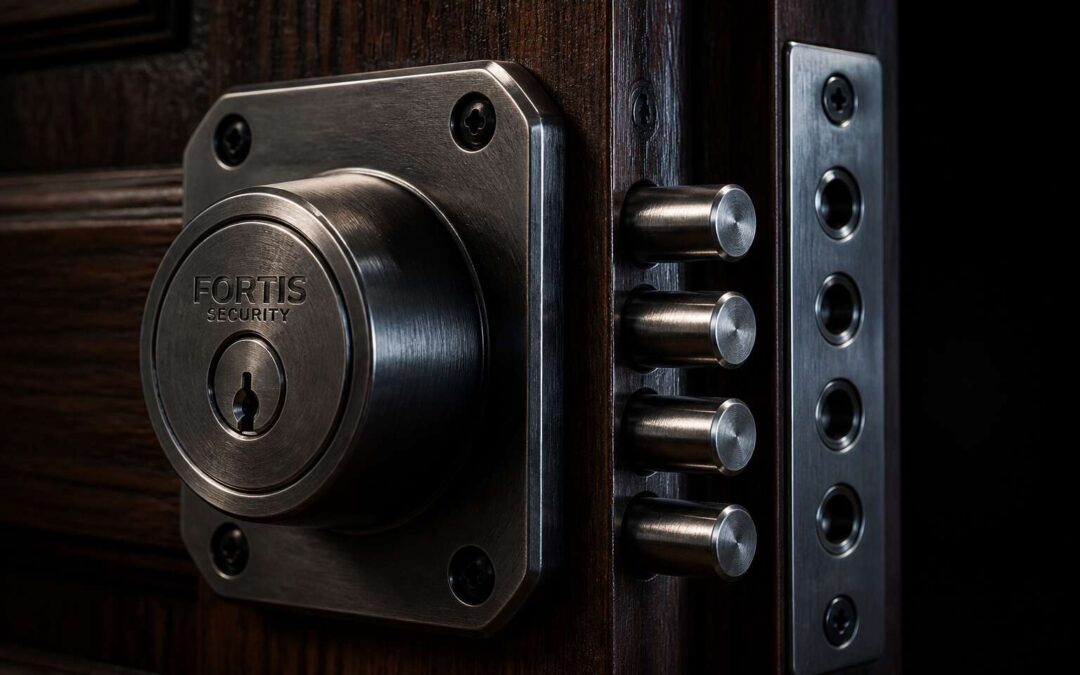
Understanding Residential Lock Security Grades
How ANSI Grade Ratings Determine Protection
Most South African homeowners never examine the tiny stamp inside their deadbolt lock. That stamp reveals an ANSI grade, a rating that determines how much punishment a lock can absorb. Grade 1 locks withstand repeated strikes and forced entry attempts. Grade 2 suits standard residential use. Grade 3 barely meets minimum requirements.
For burglar door locks, ANSI ratings matter because they test durability alongside other factors. They measure torque resistance, cycle life, and attack tolerance.
- Grade 1: 1,000,000 cycles, 10 strikes without failure
- Grade 2: 400,000 cycles, 5 strikes
- Grade 3: 200,000 cycles, 2 strikes
Those numbers translate directly to how long your door holds against crowbars and kicks. I have seen Grade 3 locks fail with a single, well placed kick. When comparing burglar door locks, the ANSI grade deserves your attention first. South African security experts rarely recommend anything below Grade 2 for external doors, particularly in higher risk areas.
What Deadbolts and Knob Locks Actually Offer
Residential lock security grades often confuse homeowners. A deadbolt and a knob lock serve different purposes, and understanding that difference matters when choosing burglar door locks. The deadbolt’s bolt extends deep into the door frame, creating a physical barrier that resists prying and kicking. A knob lock, by contrast, holds the latch in place but offers little resistance to force. Its primary function is convenience, not security.
Consider what each actually offers:
- Deadbolts: solid steel bolt, deeper throw, better resistance to physical attack
- Knob locks: integrated latch, easier to bypass, suitable for internal doors
For external doors, the deadbolt is the only real choice. Knob locks fail under pressure, and I have seen it happen. The security grade stamped on the box tells you how much abuse the mechanism can take, but the type of lock determines how that abuse is distributed. When you compare burglar door locks, start with the lock type, then look at the grade.
Common Vulnerabilities in Standard Entry Sets
A lock’s grade number hides in plain sight, yet it dictates how long the lock resists a crowbar. Grade 1 offers commercial strength, Grade 3 protects very little. Most residential entry sets land at Grade 2, a compromise that works only when installation matches the specification.
The naked latch is the first failure point. A standard entry set exposes it, and a sharpened screwdriver can retract it in seconds. Then comes the strike plate, often held by 25mm screws that pull straight out of soft timber. I have watched burglar door locks fail not because the cylinder broke, but because the frame gave way.
- Weak screws in the strike plate
- Aluminum or plastic latch housings
- Gaps between door and frame over 3mm
Grade ratings assume perfect framing and alignment. That assumption rarely survives the real world!
High-Security Deadbolt Options for Exterior Doors
Single Cylinder vs. Double Cylinder Design
One key or two? South African homeowners rarely ask that question before installation, yet it defines how a deadbolt behaves under stress. I have seen this choice go wrong. A single cylinder deadbolt uses a key outside and a thumb turn inside. A double cylinder requires a key on both faces. Both affect the integrity of your burglar door locks.
Here the difference matters:
- Single cylinder: quicker exit during an emergency
- Double cylinder: blocks intruders who break glass and reach inward
Burglars test the thumb turn on single cylinder units when a window sits close. Double cylinders stop that method but complicate fire escape when the key is misplaced. Your choice should depend on window placement, door position, and residents’ habits. If you secure a front door near a large pane, the double cylinder appeals. Those tradeoffs define what your burglar door locks accomplish at night!
The Role of Anti-Drill and Anti-Pick Pins
The quiet click of a deadbolt tells you nothing about the steel pins inside. Yet those pins decide whether a burglar’s drill bit spins uselessly or sinks straight through. High-security deadbolts now use hardened steel anti-drill pins that shatter standard bits, while anti-pick pins with spool and mushroom profiles force tension tools to slip. This is where burglar door locks earn their keep. A pick attempts to lift each pin to the shear line, but these contoured pins create false sets, making the effort fail. Drill-resistant plates beneath the cylinder add another layer. The result is a lock that resists tools most criminals carry. For an exterior door with visible street access, this matters. The cost difference is small compared to the peace of mind.
Choosing the Right Throw Length and Bolt Material
A 30 second delay can end a break in attempt. In South Africa, many intruders work against the clock, and the lock that holds for half a minute often convinces them to move on. This is why the right throw length and bolt material are central to high security deadbolt options for exterior doors.
The throw length determines how much metal reaches into the door frame. An average deadbolt extends about one inch. A longer throw, often 2 inches, locks deeper into the strike plate. That extra inch allows the bolt to catch the frame’s stud rather than just the flimsy edge. For burglar door locks on street facing doors, a deeper throw is a simple advantage. It also removes the gap that a crowbar can use to bend the frame and pop the bolt. That extra inch may not sound like much, but it changes how the lock behaves under force!
The bolt material is equally important. Brass bolts look polished but they are softer. A hardened steel bolt resists sawing and hacksaw blades. Some manufacturers combine materials, putting a hardened steel core inside a stainless sleeve to prevent rust and corrosion. For an exterior door exposed to coastal weather, this combination matters. The bolt must be tough without becoming weak due to moisture.
When evaluating burglar door locks, consider the door’s location and role. We tend to judge a deadbolt by its brand or finish, but the physical details matter. A front door in a complex may need a 2 inch hardened steel bolt. A back door in a private yard may be fine with a standard throw if it has a reinforced strike plate. The point is to match the lock to the actual risk. Both factors separate quality burglar door locks from decorative hardware. The most expensive deadbolt will not help if the bolt material cannot handle a saw or the throw length fails to reach the frame.
Multi-Point Locking Systems for Stronger Entry Points
How Multi-Point Engagement Distributes Stress
A single bolt bears the weight of an attack. Multi-point systems change that equation. When three or more locking points engage simultaneously, force spreads across the door frame instead of concentrating on one spot.
South African homeowners often discover that their burglar door locks depend entirely on one contact point. The difference lies in stress distribution. With multi-point engagement, an intruder must defeat every point at once. The frame, hinges, and strike plates share the load. No single component carries the burden alone.
- Each locking point creates a separate shear plane, splitting the force applied by a crowbar.
- The door panel transmits stress to the frame, which absorbs energy across a wider surface area.
- Frame distortion becomes harder to achieve because the load is never localized.
That is why multi-point systems outperform standard setups in forced entry attempts.
Compatibility with Modern Door Materials
Modern entrance doors in South Africa are no longer simple timber slabs. Aluminium extrusions, steel skins and composite cores respond differently to pressure, temperature and impact than traditional wood. Burglar door locks and their multi-point mechanisms must accommodate those material behaviours without sacrificing security.
That is why modern multi-point hardware uses adjustable strike plates, flexible tie bars and self-locating keepers. These components allow the lock to sit flush against uneven surfaces and remain aligned as the door expands or settles.
- Adjustable keepers adapt to misaligned aluminium frames.
- Reinforced backing plates prevent thin steel skins from flexing.
- Pre-machined slots suit composite cores without weakening them.
Manufacturers publish compatibility specifications for this reason. The best multi-point systems are engineered for the exact material profile, not adapted after the fact.
Upgrading Existing Mortise Locks
A single mortise lock, however robust, still represents one point of attack. Upgrading to a multi-point locking system changes the fundamental psychology of a forced entry. It replaces the quiet confidence of a solid bolt with the visible resistance of steel engaging at multiple points along the door’s edge. The intruder now faces a distributed defense, not a single obstacle.
This upgrade process is more involved than swapping a cylinder. It requires careful fitting of the multi-point hooks and rollers into the door edge, paired with the corresponding keepers in the frame. The genuine shift occurs when the handle lift engages both the main bolt and the auxiliary hooks simultaneously, turning a single action into a comprehensive seal.
– Top and bottom hooks anchor the door to the frame, preventing leverage attacks on the corners.
– The central deadbolt resists direct impact and drilling.
– Anti-pull strikes near the hinges add another layer of stubbornness.
This conversion is a study in preparation. For an older home, the reward is a door that feels immovable, an honest upgrade in the daily ritual of locking up and sleeping soundly. That is the real value of better burglar door locks.
Benefits of Keyed Alike and Master Keying
Multi-point locking systems engage bolts at several points along the door edge, rather than only at the centre. This spreads the force of an attack across the entire frame. A burglar now faces independent mechanisms that must each be defeated separately. The kitchen door, the garage door, the front entrance; when each uses a multi-point lock, the whole house becomes a harder target. For South African homes, these burglar door locks turn weak points into strong ones.
Keyed alike and master keying add another practical layer to burglar door locks. Keyed alike means the same key opens every lock you own. Master keying lets a landlord or a trusted family member hold one key that opens everything, while your personal keys still work only on their own doors.
The convenience is real:
– No more hunting for the right key in the dark.
– One master key for the caretaker, without handing out copies.
A multi-point system with a sensible key plan gives you strength and control without complicating your day.
Installation Considerations for Retrofit Projects
Retrofitting a multi-point locking system demands an honest assessment of your existing door and frame. A warped timber door, a misaligned strike plate, or a frame that has shifted over the years will quietly sabotage even the most robust burglar door locks. The installer must measure the rebate depth and confirm the gearbox fits before any cutting begins. This is where many retrofit projects stumble.
Older South African homes often carry steel frames that need specialist attention. Wooden doors with decorative panels limit where the locking points can rest. A skilled fitter will check the sash alignment and reinforce the frame where necessary, so the new hardware seats properly from day one.
Verify these points before installation:
- The door’s core material and thickness
- The frame’s structural condition
- The manufacturer’s template accuracy
- The local availability of replacement parts
Doing this prevents the classic failure of a lock that operates beautifully when new, only to jam after a season of humidity and heat. The right preparation makes the difference between a retrofit that impresses and one that disappoints.
Reinforcing Door Frames and Strike Plates
Heavy-Duty Strike Plates and Longer Screws
Let’s be honest. A mighty deadbolt is a hollow promise if the frame around it is soft pine and the strike plate is held by tiny screws meant for a cabinet. The lock resists, but the door frame splinters. That is the real story of forced entry.
Reinforcement turns the weakest points into the fortress. The strike plate is the anchor. These are the upgrades that matter:
- A heavy steel strike plate that is thick, not flimsy.
- Stainless steel screws that are long enough to bite deep into the structural framing, not just the trim.
A standard strike plate anchors into the jamb, often a thin piece of wood. Upgraded screws reach past that and grip the solid wall stud behind it. This simple swap holds the latch in place during a violent kick. Even a high-security lock cannot protect you if its anchor fails. For robust intruder defense, the complete assembly must work as one unit. The story of a secure entry is written in the steel behind the plate, not just the keyhole in front. Solid reinforcements bridge the gap between the lock cylinder and the actual bones of your home. This is how you truly protect your family and secure your sanctuary. In South Africa, this level of detail separates premium protection from standard burglar door locks.
Door Jamb Armor and Security Plates
A single kick lands beside the lock. The deadbolt holds. The jamb splinters. That is why jamb armor exists. It is a metal shield that wraps around the strike area, spreading the force of impact across a wider section of the frame. Security plates serve the same purpose. They reinforce the wood that the latch anchors into.
For burglar door locks to perform, the surrounding frame must survive the assault. Jamb armor adds a layer of steel that resists spreading and bending. Without it, a strong lock only moves the point of failure. The frame gives way, and the door swings open.
- Jamb armor covers the full height of the strike plate.
- Security plates attach over the existing jamb, beyond the trim.
- Both options work with existing burglar door locks and deadbolts.
The installation is straightforward. Remove the old strike plate, fit the armor over the jamb, and secure it with long screws that reach the wall stud. The result is a continuous steel path from the bolt to the structural framing. This is what separates a reinforced entry from a decorative lock. In South Africa, that difference matters.
Hinge Reinforcement for Outward-Swinging Doors
Outward-swinging doors face a different threat. The hinges sit outside, exposed. Pop the pins, and the door swings free, even with the best burglar door locks in place!
Reinforcing the frame goes beyond the strike plate. The hinge side needs equal attention. Security hinge bolts anchor the door with an interlocking pin that cannot be removed from the outside. Long screws that penetrate deep into the masonry or stud make prying nearly impossible.
- Interlocking hinge bolts that resist removal
- Extra-long screws reaching the stud behind the frame
- Reinforced hinge plates that spread prying force
Without hinge reinforcement, an outward-swinging door becomes the weakest point. Burglars test the hinges first because it is quieter than kicking. The frame must hold on both sides, not just where the lock engages. In South African homes, outward-swinging doors are common, making hinge security central to choosing burglar door locks.
Protecting Glass Panels Near Deadbolts
A deadbolt’s strength means nothing if the surrounding frame crumbles upon impact. The strike plate is the point where the bolt meets the frame, and a flimsy plate with short screws can be torn out with a single, well-placed kick. Installing a heavy-duty strike plate with screws that reach deep into the wall stud transforms that weak spot into a formidable anchor.
Glass panels near the deadbolt present a separate, silent vulnerability. A burglar can shatter the glass, reach inside, and simply turn the latch. For these situations, the choice of burglar door locks often comes down to double cylinders or locks with a thumb turn that can be removed from the interior. To further complicate matters, you can reinforce the glass itself.
– Apply shatterproof security film to the glass.
– Install a laminated glass pane that resists breaking.
– Use a reinforced deadbolt with an anti-thumb-turn mechanism.
A reinforced frame and protected glass work in tandem with the lock cylinder. Each element must be robust for the complete system to function. If the glass breaks easily or the frame splinters, the lock’s internal complexity becomes irrelevant. In South African homes, the combination of a reinforced strike plate and hardened glass is a practical response to a known entry method, making the entire door assembly a cohesive barrier.
Using Security Bars and Floor Anchors
Statistics from the South African Police Service show that forced entry remains the leading method of residential burglary. Most often, the frame itself gives way before the lock does. I have seen crowbars exploit a weak frame in seconds. A security bar, mounted vertically along the door edge, transfers impact energy into the brickwork. A floor anchor pins the door to the slab, preventing leverage from below.
- Heavy-duty steel bars that bolt through the frame into the masonry.
- Floor anchors with hardened steel pins that engage a receiver plate.
These reinforcements work with the cylinder and bolt. They stop the frame from flexing under a crowbar, giving the mechanism a solid chance to hold. The most expensive burglar door locks cannot compensate for a frame that yields under pressure. In South African homes, this combination is a direct answer to prying attacks.
Peepholes and Door Viewers as Deterrents
The strike plate is the first point of surrender during a forced entry. A standard plate anchored with short screws pulls free with one wrench. Replacing it with a hardened plate and longer screws that bite into the brick behind the frame changes the physics. The lock holds because the frame holds. This matters more than the brand of burglar door locks you choose.
Reinforcing the frame itself takes this further. Steel channels fitted behind the strike area distribute force across multiple anchoring points. The attack becomes slow and noisy, which intruders avoid. Even quality burglar door locks depend on this support to perform as intended.
Peepholes and door viewers add a different layer of defence. A wide-angle lens with a luminous ring lets you see the full landing, even in dim light. You can speak through a reinforced steel plate without opening the door. That moment of recognition can deter a stranger entirely.
Key Control and Access Management Best Practices
Keyless Entry Options with Audit Trails
Managing who holds keys to your property is often underestimated. A single unreturned key becomes an open invitation. Key control starts with knowing exactly who has access, and audit trails change the game.
Modern keyless entry systems do more than unlock a door. They record every entry, timestamp every attempt, and flag anomalies. Most break-ins involve some form of insider knowledge or stolen credential.
For business premises, the benefits are clearer. You can revoke access instantly without rekeying every cylinder. Consider these features when choosing a system:
- Individual PIN codes for every user
- Biometric verification for high-security zones
- Cloud-based logs that timestamp each entry
- Remote lockout for lost credentials
Even the strongest burglar door locks rely on proper key management. Without oversight, a lock is only as secure as its keyholder. Electronic access control closes that gap with a complete history of entries.
Changing Locks After Moving or Lost Keys
When you move into a new property, the handover of keys rarely accounts for every copy made along the way. Estate agents, contractors, and previous tenants might all hold keys you will never see returned. Changing the cylinders before you settle closes that uncertainty. This straightforward adjustment to your burglar door locks is often delayed for months, and that delay is exactly what a patient intruder counts on.
A lost key carries a similar weight. Someone with your key could be waiting for the right moment. Rekeying or replacing the locks immediately gives you back the upper hand. Your burglar door locks should only ever answer to people you choose.
A clear approach to lock changes includes:
– Replacing cylinders on all exterior entry points
– Keeping spare keys with one trusted person
– Recording the date of every lock change
Few home security measures speak as plainly as a lock whose history begins on the day you take ownership.
Layered Security Strategy for Everyday Use
Your front door key might already be in someone else’s pocket. Many South African burglary cases show no signs of forced entry. No broken frames, no damaged locks. Just a key that once sat in your keyring. Key control is the overlooked half of any access strategy. You can upgrade to reinforced strike plates and heavy-duty cylinders, but one unaccounted key makes those burglar door locks pointless. I have watched homeowners obsess over cylinder grades while a duplicate key sits in a contractor’s toolbox.
A layered security strategy spreads risk across habits and tools instead of a single point of failure.
- Keep a written register of every key copy
- Rotate access codes on keypads every quarter
- Issue different keys to different people
- Store spare keys off the property
Pair that discipline with burglar door locks that resist picking and drilling, and opportunists will look for an easier property. The objective is not to guarantee safety. The objective is to make unauthorised entry slow, loud, and obvious!