
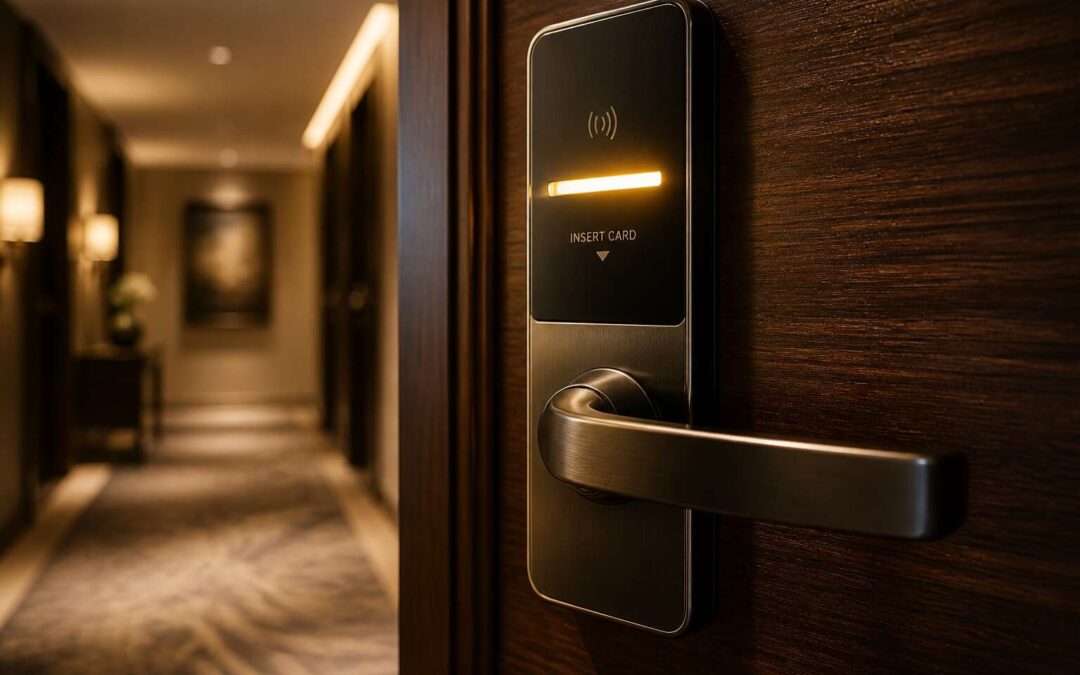
Evolution of Hotel Access Security
Traditional Keys and Their Limitations
Let’s be honest, the classic hotel key was less a security feature and more a lump of metal you could lose in three seconds. You know the drill. You slide it into the slot wrong, wiggle it, and pray the mechanism doesn’t jam at 2 AM while you’re carrying a questionable room service tray. Those old systems relied on sheer mechanical tolerance, meaning anyone with a similar blank could, in theory, gain entry. It was a cozy illusion of safety.
The shift away from these mechanical behemoths wasn’t just about convenience. It was a direct response to a glaring vulnerability. The cost to rekey a cylinder after a key went missing was significant, so most establishments simply never did it.
Here are the headaches that pushed the industry to change:
1. No audit trail. You could never prove who accessed the room.
2. The physical key itself could be copied at any hardware shop.
3. Staff keys were often master keys, compromising every room on a floor.
The move to electronic systems, primarily magstripe and later RFID, solved the core logistics problem. However, this initial transition created its own quirks, specifically the dreaded demagnetized swipe card that only works after twelve attempts. While the hardware evolved, the fundamental question of truly secure door locks in hotels remained a moving target. The latest phase of this evolution focuses less on the key and more on the network behind it, integrating with the hotel’s property management software to create a living, breathing access log that works better than any warden.
Swipe Cards and Magnetic Strips
The magnetic stripe card arrived as a quiet revolution. By the late 1980s, major hotel chains were trading brass for plastic, and the humble swipe became the new ritual at every corridor.
These cards held an encrypted string of data that could be wiped with a stray magnet from a minibar fridge. That fragility forced housekeeping to carry spares, and guests to learn the delicate art of the angled swipe.
- Front desk staff could void a card instantly, no locksmith needed.
- Each swipe logged a timestamp, giving managers their first real audit trail.
The shift changed door locks in hotels permanently, though the physical card remained a weak link. The next leap would abandon the strip entirely, but that is a story for another section.
The Shift to RFID Technology
The magnetic stripe had a hidden cost. Every demagnetized card, every failed swipe, every midnight trip back to the front desk added up. RFID, radio frequency identification, erased that cost by reading credentials through the air instead of a strip. The lock never touches the card, so the card has nothing to wear out. That alone changed how properties manage door locks in hotels.
I confess, I was skeptical. The first RFID reader I tested demanded no special skill. There was no angle to learn!
But the engineering rationale was solid:
- No exposed strip to demagnetize or scratch
- Session data that rotates after every check-in
- Sealed readers that ignore dust and humidity
Then came mobile credentials. A phone negotiates a one-time encrypted session with the reader, and door locks in hotels became nodes on a network, reporting access events and accepting remote updates without a technician on site.
Smart Locks and Mobile Access
Remember the panic of watching a keycard fail at midnight? Those moments are fading. The smartphone has become the credential, and door locks in hotels now operate as quiet nodes in a connected ecosystem.
Mobile access starts the moment a guest enters the lobby. The phone negotiates a one-time encrypted handshake with the reader. The lock records the event, updates the session, and forgets the key.
The benefits reach property managers directly:
- Guest permissions sync with the property management system
- Audit trails name every person who enters a room
- Battery monitors predict failure before a guest is stranded
For South African properties, this reduces physical wear. I have watched older locksets fail from rust and dust; modern readers seal themselves against both. Door locks in hotels today are about control, and in a country with unique security challenges, that control changes everything.
Key Types of Modern Locking Systems
Electronic Key Card Locks
In 2026, electronic key cards will unlock over 80% of hotel rooms globally, a figure that speaks to the system’s enduring utility. Beyond the raw convenience, these plastic credentials offer a granular level of control for management. When a guest checks out, the unique code on their card is immediately deleted from the door locks in hotels, rendering the plastic inert. You no longer worry about the master key copy that has been sitting in a lost and found drawer for years.
The technology is not uniform, however. There are several distinct flavours of card based entry, each with its own operational footprint:
– Proximity cards: These operate on a 125 kHz frequency. You wave the card near the reader, no contact required. They are cheap and durable, making them a popular choice for budget and midscale hotels.
– Contactless smart cards: These run on 13.56 MHz. They hold more data and process transactions faster. Their encryption protocols are more robust, which is a significant deterrent to casual cloning attempts.
– Stored value cards: These integrate with the hotel’s retail and dining systems, allowing guests to charge meals and spa services to their room. The card becomes a small wallet that the guest carries in their pocket.
This shift has quietly elevated the front desk. Issuing a card takes seconds, and reprogramming a lock after a staff member departs is a task that no longer requires a ladder and a screwdriver. For the guest, the experience disappears into a seamless gesture. They slide the piece of plastic into a wallet slot, never pondering the complex mathematics performing a silent audit behind the door handle. The physical key has become an artefact, while the card remains stubbornly relevant against the rise of the smart phone.
Bluetooth and App-Based Locks
Most guests have stopped carrying cash, maps, cameras, and keys. The phone replaced them all. Bluetooth and app based locks in South African hotels rely on the guest’s device broadcasting a credential. No card to lose, no plastic to demagnetise. The lock sees the phone, checks the digital signature, and grants entry. That is the sales pitch. The reality involves variables:
– The guest must have downloaded the hotel app.
– The guest must have remembered their password.
– The guest’s Bluetooth must cooperate after a long flight.
The front desk now troubleshoots firmware, not key cutting. Modern door locks in hotels have become software, which means they occasionally behave like software. They update at awkward moments and refuse to work when the phone is on 4% battery. For the hotel, the benefit is data. The lock knows who entered, when, and for how long. For the guest, the benefit is vanity. Nothing says modern traveller like ignoring the check-in desk.
Biometric Door Locks
Fingerprints do not demagnetise! They do not run out of battery either. Biometric door locks are replacing cards because the body is the credential. South African hotels are testing these systems at executive floors and secure entrances.
The lock scans a finger or palm, matches it against a stored template, and opens within a second. No app, no plastic, no password. For a guest with wet hands or a bandaged thumb, it fails. We need a fallback.
- Faster check-in for repeat guests
- No lost credentials
- Better audit trails for security teams
Biometric data is sensitive. The hotel stores it in encrypted modules, not on a central server. Door locks in hotels with this technology work offline once enrolled. Guests appreciate the convenience, though privacy concerns remain.
Keypad and PIN Locks
Keypad and PIN locks replace physical credentials with something easier to remember. A guest types a code, the lock clicks open, and the room is theirs. I have watched these systems operate in guesthouses and corporate hotels across South Africa, where they quietly outperform fancier rivals.
Door locks in hotels that use PIN codes offer a clear benefit: nothing to misplace. There is no card to lose, no phone to drain, no fingerprint to smudge. The front desk can set a code to expire at checkout or rotate it between guests.
- Codes can be changed in seconds
- No physical media to program
- Entry times are recorded automatically
The system is not flashy, but it is consistent. For a hotel that values reliability over novelty, fewer moving parts means fewer failures!
Dual Authentication Systems
There is a strange comfort in knowing that a door will only open for one person, and no one else. The latest evolution in hotel security whispers of this certainty, offering a layer of protection that feels almost paranoid, until you need it. This approach, called dual authentication, demands two separate credentials before the lock yields. It is a pact between the guest and the machine, a promise that requires more than a single key.
Consider the silent negotiation that happens at the threshold: a guest presents their card, and the system reads it. But the lock remains stubborn, waiting for a second proof of identity, a PIN or a fingerprint. This double-check is not about complexity, but about a deeper sense of control. The fear of a lost key or a cloned card, which has haunted the hospitality industry for years, becomes a ghost of the past. For high-value rooms or back-of-house areas, this layered security is a quiet sentinel. The layers are simple to understand:
1. The first layer, something you have. A key card or a mobile device.
2. The second layer, something you know. A personal identification number.
3. The third layer, something you are. A biometric scan, if the system is advanced.
The practical application of this for door locks in hotels is a tale of two guests. One is a hurried business traveller who wants speed, and the other is a celebrity who craves anonymity. For the latter, a lock that requires a card and a thumbprint offers a form of digital invisibility. It reduces the risk of a master key compromising an entire floor, because each room in the hotel becomes its own unique fortress. The system is not foolproof, but it raises the stakes significantly for anyone trying to gain entry without permission.
This technology does not always scream for attention. In many properties, it is a silent upgrade, a standard feature of door locks in hotels that prefer substance over spectacle. The reader on the door frame does not need to be flashy, it just needs to be thorough. As a traveller, you might not notice the extra effort required at the door, but you will notice the quiet confidence it affords. The operator of the hotel, however, sees the audit trail, the logs of who entered and when, a ledger of access that provides a clarity that was previously impossible. That is the real magic, not in the gadget, but in the certainty it provides.
Security Features to Prioritize
Anti-Tamper Alarms
Anti-tamper alarms detect physical attacks on a lock, such as drilling or prying, and immediately flag the incident to security. For door locks in hotels, this feature means guests sleep undisturbed while staff respond to a breach notification.
Prioritize alarms that operate independently of the lock’s main power. A tamper alert that dies with a battery failure is useless. Also, look for systems that log every tamper attempt with a timestamp. This data helps investigations without guesswork. Consider these essentials:
- Remote alerts via Wi-Fi or a hardwired network
- Automatic re-locking after an alarm
- Sensitivity adjustments to avoid false triggers
These details separate a robust lock from a mere inconvenience. A well-calibrated alarm discourages would-be intruders,because they know a reaction will come quickly.
Audit Trails for Guest and Staff Activity
An audit trail is the security operator’s paper trail. Modern door locks in hotels record every credential presented, every unlock, and every failed attempt. Those records reveal patterns. A staff member opening rooms at 2 a.m. becomes a matter of record, not rumour.
The best systems store logs locally and in the cloud, with redundancy. They timestamp entries to the second. For South African properties managing shift workers and temporary housekeeping staff, this trail is your evidence. I have watched properties scramble after an incident with no log data at all.
Consider what matters most when reviewing audit capability:
– Alerts for out-of-pattern access, like a laundry attendant entering a suite
– Exportable reports that match your booking system
– Tamper markers that flag forced entries
A robust audit trail does not prevent crime. It removes the mystery.
Encryption and Secure Data Transmission
Encryption protects the data that door locks in hotels generate and exchange. Every credential presented to a lock creates a packet of information. That packet travels from the door to a controller, then to a server. If that path is unencrypted, anyone with network access can read it.
Secure data transmission is not optional. A lock that broadcasts unlock codes in plain text is a liability. South African properties must also comply with POPIA. Guest access data is personal information. Losing it to a network sniffing attack carries legal weight.
- 256 bit AES encryption for all wireless communication
- TLS 1.2 or higher for cloud integrations
- Encrypted storage for audit logs on the lock itself
I have watched vendors dodge this question at security expos! Ask how their locks handle session keys. A system that reuses static keys is already compromised.
Mechanical Key Override Options
Beneath the polished circuitry of every electronic lock lies a mechanical key override. This humble cylinder can become the weakest link or the final guardian. For door locks in hotels, the override demands scrutiny. A single master key floating through the wrong hands undoes years of investment.
I once visited a coastal guesthouse where the override cylinder accepted a standard skeleton key. The manager shrugged. He did not realise the same key could open the storeroom, the office, and the back gate. That is the quiet horror of neglected mechanics.
- Demand restricted keyways with patented blanks.
- Insist on cylinders that can be rekeyed without replacing the entire lock.
- Look for override cores that are shielded by hardened steel collars.
These details determine whether your mechanical fallback protects or betrays. The override should be the exception, never the routine. Trust nothing less!
Thumb Turn and Deadbolt Enhancements
A deadbolt is a small ceremony of iron. For door locks in hotels, the manual bolt remains the last argument between a guest and the outside world. Prioritize thumb turns that move with a dry, audible click. A sluggish turn invites neglect.
Look for deadbolts with a minimum throw of one inch. Ensure the strike plate uses screws long enough to bite into the wall frame, not merely the trim. Consider these enhancements:
- Thumb turns with a knurled grip for wet or trembling fingers.
- Deadbolts that engage automatically when the door closes.
- Reinforced strike plates with hardened steel boxes.
A guest cannot quiet a bolt that refuses to budge. The best thumb turn offers resistance, then surrender. It is a small, private ritual.
Operational Benefits for Hotel Management
Streamlined Check-In Processes
The morning rush at a front desk can overwhelm even seasoned staff. Modern door locks in hotels reduce that strain because guests receive access details before arrival. A clerk no longer hunts for a plastic card or waits for a maintenance run. The system assigns a digital key in seconds, syncing with a guest’s phone or a self service kiosk. Queues shrink, and personnel focus on genuine hospitality instead of administrative chores.
The result affects other departments. Housekeeping receives immediate notification when a room is occupied. The reservation system updates automatically, preventing double bookings and frustrated travellers. A secure lock network supports remote audits, letting managers verify entry records at any time. This transforms a simple lock into a management tool that saves hours every week.
Remote Lock Management Across Properties
Managing a scattered portfolio of hotels is a peculiar kind of vigilance. Remote lock management across properties lets a single console speak to every door, from Cape Town to Durban. I have watched operators adjust access rights without crossing a lobby. The system flags a stuck latch or a low battery before guests notice. This changes the daily rhythm of maintenance crews.
Here is what becomes possible:
– Rekey a room from the back office.
– Revoke a lost key instantly.
– Monitor entry patterns across different buildings.
Door locks in hotels now behave like silent sentinels, reporting their own distress. The old ritual of physical inspections fades into memory. A manager in Johannesburg can examine a lock’s history in Umhlanga with a few keystrokes. That is the true economy of scale, and door locks in hotels become loyal informants rather than passive barriers.
Integration with Property Management Systems
Property management system integration links door locks in hotels directly to billing, housekeeping, and security updates. The lock records an entry, and that event flows to the front desk dashboard. No manual downloads. No mismatched spreadsheets! I recall a hotelier in Sandton who eliminated late checkout disputes once the system connected the two.
The operational benefits appear in daily routines. Housekeeping gets a push alert when a guest departs. Engineering receives a battery warning before a lock fails. Front office staff stop rekeying physical keys because the access schedule updates itself. Consider what this integration permits:
- Real-time room status for the sales team
- Seamless billing for incidental charges
- Centralized staff audit trails
These small automations reduce delays, and the door locks perform with greater accuracy.
Reducing Key Replacement Costs
Lost keys once created hotel budget strain through rekeying, cylinder swaps, and locksmith callouts. For door locks in hotels that still rely on brass blanks, every missing key carries a compounding price. Hotels in Johannesburg report these expenses disappear once credentials turn digital. A lost card costs cents to replace. A lost key demanded a full cylinder swap!
The savings appear in monthly reports. Bulk key blank orders disappear. Emergency maintenance calls drop. Staff stop waiting for replacements while guests wait at the door.
- No cylinder changes after guest departures
- No locksmith fees for lockouts
- No administrative hours tracking key inventories
These numbers appear in budget reviews. I have watched the line item shrink month after month. Digital credentials shift the budget line from recurring expense to one-time installation cost.
Detailed Activity Logs for Security Audits
The most telling security improvement is the disappearance of ambiguity. When an incident occurs, the sequence of events is no longer a matter of memory or conjecture. The audit trail from modern door locks in hotels provides a chronological log of every credential use, as precise as a bank statement.
This data transforms the management of security audits. A manager can simply pull a report to identify which staff member accessed a corridor at a specific hour, or when a maintenance request was fulfilled. There is no need to interview witnesses or sift through paper sign-in sheets.
The operational value is considerable:
1. Rapid verification of guest complaints regarding unauthorized entry.
2. Immediate confirmation of staff performance regarding room access times.
3. Unambiguous evidence for investigating lost property claims.
4. A clear method for reviewing after-hours property activity.
For properties plagued by internal theft, this feature alone justifies the upgrade. The conversation shifts from accusations to facts. Housekeeping disputes become a matter of reviewing the data rather than questioning personal integrity. This efficiency is not a luxury; it is the new standard for professional hotel administration. The time saved during investigation is immediately returned to guest service.
Choosing the Right Locking System
Assessing Property Size and Guest Volume
Choosing a locking system without weighing your property’s footprint is a common mistake. A 20-room guesthouse operates differently than a 500-room convention hotel, and door locks in hotels must reflect that reality. Guest volume determines how often credentials are issued and revoked. High turnover demands cloud-based management; smaller properties may thrive with standalone locks. Before you buy, audit your daily traffic and room entry frequency.
Consider these variables:
- Peak occupancy across seasons
- Number of staff needing access
- Frequency of room changes per day
From my experience, ignoring these creates delays at the front desk or security gaps in quiet corridors. The right system scales with actual usage, not a manufacturer’s promise.
Compatibility with Existing Infrastructure
Upgrading to smart systems often fails when the building’s wiring or door frames are ignored. The mechanical skeleton must accept new electric strikes or magnetic holds. Before purchasing, test the door thickness, latching mechanism, and power source location. In older structures, a retrofit can cost more than the lock itself. Assess the existing network infrastructure for Power over Ethernet (PoE) or Wi-Fi strength. For example, a historic guesthouse in Cape Town may have heavy solid-core doors that block signals. Consider these compatibility checkpoints:
- Door thickness and frame material
- Existing power wiring near entries
- Network coverage in stairwells and corridors
Choosing door locks in hotels without this audit leads to failed installations or hidden charges. A lock that works in a new build might be useless in a converted Victorian property. Always request a site survey from the supplier. That simple step saves weeks of downtime. No amount of digital features compensates for a poor physical fit.
Budget Considerations and Total Cost of Ownership
The cheapest upfront quote for door locks in hotels often hides the most expensive long term relationship. A bargain lock that drains batteries monthly or requires proprietary cards from a single supplier becomes a recurring financial leak. South African hospitality managers must look beyond the initial invoice.
Operational costs dominate the total ownership picture. These expenses include replacement parts, technician call outs, and staff training time. A system with a robust audit trail reduces disputes and theft. That feature alone can justify a higher initial price through lower shrinkage. Energy consumption also matters, especially for Wi-Fi connected locks that demand constant power.
When comparing quotes, consider these expenses:
– Annual battery replacement cost per door
– Software licensing and cloud hosting fees
– Cost of replacement key cards or fobs
– Labour for reprogramming after staff turnover
A durable lock with fewer moving parts will outlive a cheaper alternative. The selection of door locks in hotels should be a ten year investment, not a quick fix. The true cost reveals itself through maintenance logs and guest satisfaction scores over time. Choose the system that your maintenance team can actually service.
Vendor Support and Maintenance Agreements
Many hotel managers discover the true character of a lock vendor only after the installation crew’s vehicles leave the parking lot. The hardware’s robustness matters, but a vendor’s service infrastructure determines whether a small fault becomes a front desk crisis.
South African properties face unique operational strain. Load shedding tests battery life, and humidity affects mechanical components. A vendor who understands these local conditions will structure maintenance agreements around them. Ask about response times, not just in writing, but on the ground. Will a technician arrive within four hours, or will guests wait two days for a fix?
Demand clarity in the service contract. The agreement should specify:
- Guaranteed response windows for emergency lockouts and repairs
- Availability of replacement parts for the full lifespan of the system
- Onsite training procedures for new front desk staff
The vendor’s maintenance history reveals more than their sales brochure. A decade of supporting door locks in hotels requires genuine logistical commitment. Their technicians must stock the right spare parts, and their call center must answer in your time zone. The true selection criterion is simple: will this vendor still be servicing your property when the initial warranty becomes a distant memory?
Guest Experience and Convenience Factors
The quiet moment when a guest approaches their room after a long flight is where door locks in hotels prove their worth. A lock that hesitates or demands a tutorial creates friction. In South Africa, where guests often arrive after lengthy domestic connections, that friction compounds quickly.
Convenience factors extend beyond the obvious. The physical reach of the keypad matters for elderly travellers. The brightness of the LED indicator matters for late-night returns. The card slot position matters for guests balancing luggage and a coffee cup.
- Contactless options that work without removing the card from a wallet
- Audible feedback that confirms locking without waking the whole floor
- Battery indicators that front desk staff can check without disturbing guests
Guests rarely discuss these details in reviews, but they remember the feeling of friction. The right door locks in hotels quietly eliminate those moments.